LogoAntiCirc
Learn · Comparison

Uncircumcised vs circumcised

What's the actual difference, which feels better, and is one really 'better' than the other? An honest, evidence-led comparison — without the myths.

Quick summary

Uncircumcised (intact)

The foreskin is present: a retractable fold of skin that covers and protects the glans (head). It's rich in nerves and delicate tissue.

Protective Sensitive Natural Functional Fuller orgasms

Circumcised

The foreskin has been surgically removed, leaving the glans permanently exposed. It's a one-time, irreversible procedure.

Removed tissue Irreversible No gliding Permanent change Sensitivity dulls over time & use Latent ED risk

Every body is different. There is wide natural variation in size, sensitivity, and experience — both for intact and circumcised men.

One exception: a dorsal slit isn't a standard circumcision — the foreskin is cut open lengthwise but no tissue is removed, so it's effectively "unzipped" rather than amputated. Because the skin is all still there, a dorsal slit can be surgically restored to full coverage. It's the only form that can be — once tissue has actually been excised (the usual case), only partial, non-surgical restoration (stretching the remaining skin) is possible.

Source: AntiCirc Study Library

The difference, simply

The foreskin is specialised, movable skin with thousands of nerve endings, blood vessels, and smooth-muscle fibres. It covers the glans when not erect, keeps it moist, and glides during movement. Whether that tissue is there or not is the one fact every comparison below flows from — to see what it actually does, read the human foreskin.

How they look — and how to tell

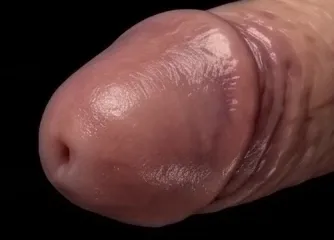
Photograph of an intact glans with the foreskin retracted

Uncircumcised (intact)

When soft, the foreskin covers the head and can be slid back. When erect, it usually retracts on its own, exposing the glans.

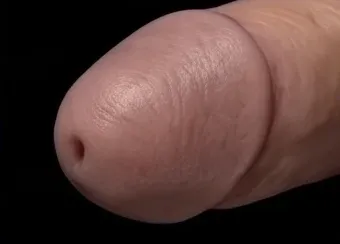
Photograph of a circumcised glans, permanently exposed

Circumcised

The head is permanently exposed whether soft or erect, and a scar line often shows partway down the shaft.

Both are completely normal. There is huge natural variation in foreskin length and coverage among intact men.

Which feels better?

This is the most-searched question — and the honest answer starts with anatomy. The foreskin and its ridged band contain a high concentration of fine-touch nerve endings, and the foreskin's gliding action reduces friction and keeps the glans moist during sex. Circumcision removes that tissue and that mechanism.

So intact men keep sensory structures that circumcised men no longer have. That said, individual experience varies, plenty of circumcised men report a satisfying sex life, and a partner's experience differs from person to person. What's not in dispute is the anatomy: the foreskin is functional, erogenous tissue — not a spare flap.

Reported experience tracks the anatomy. Intact men often describe fine, fingertip-level sensitivity across the head and inner foreskin — the kind of light-touch feeling that registers easily during oral sex or with toys — and many say they reach a fuller orgasm more readily. Some circumcised men, by contrast, report feeling relatively little until they are close to climax, and needing more intense or prolonged stimulation to get there. This is self-reported rather than clinical, but it lines up with the studies below — Bronselaer (2013)[41] found circumcised men more often reported numbness and difficulty reaching orgasm.

What the research says

Full study library

The peer-reviewed evidence on sensation and sexual function is genuinely mixed — some studies measure a reduction, others find none. We list both, drawn live from our Study Library.

Examining penile sensitivity in neonatally circumcised and intact men using quantitative sensory testing

Bossio JA, Pukall CF, Steele SS (2016) · Journal of Urology

Quantitative sensory testing that found no significant difference in glans sensitivity between circumcised and intact men — an often-cited counterpoint to Sorrells, included here for balance.

View source

Fine-touch pressure thresholds in the adult penis

Sorrells ML, Snyder JL, Reiss MD, et al. (2007) · BJU International

Study finding that the five most sensitive areas of the penis are removed by circumcision, with the foreskin being more sensitive than the glans.

View source

Effects of circumcision on male sexual functions: a systematic review and meta-analysis

Tian Y, Liu W, Wang JZ, et al. (2013) · Asian Journal of Andrology

Opposing-view meta-analysis (10 studies, 18,740 men) finding no significant difference in premature ejaculation, ejaculation latency, or orgasm difficulty — concluding circumcision is unlikely to harm sexual function, while conceding low evidence quality and high heterogeneity. The more neutral counterpoint to Sorrells/Bronselaer/Frisch; included so the contested picture is shown honestly, not cherry-picked.

View source

Male circumcision decreases penile sensitivity as measured in a large cohort

Bronselaer GA, Schober JM, Meyer-Bahlburg HF, et al. (2013) · BJU International

Large Belgian study finding circumcised men report decreased sexual pleasure and more difficulty achieving orgasm.

View source

Male circumcision and sexual function in men and women: a survey-based, cross-sectional study in Denmark

Frisch M, Lindholm M, Grønbæk M (2011) · International Journal of Epidemiology

National Danish survey associating circumcision with more frequent orgasm difficulties in men and a higher rate of unfulfilled sexual needs and pain in their female partners.

View source

The effect of male circumcision on sexuality

Kim D, Pang MG (2007) · BJU International

Study of men circumcised as adults showing significant decrease in masturbatory pleasure and sexual enjoyment post-circumcision.

View source

Circumcision in Australia: prevalence and effects on sexual health

Richters J, Smith AMA, de Visser RO, et al. (2006) · International Journal of STD & AIDS

Large national Australian survey examining circumcision prevalence and its associations with sexual difficulties across the population.

View source

Penile sensitivity and sexual satisfaction after circumcision: are we informing men correctly?

Masood S, Patel HRH, Himpson RC, et al. (2005) · Urologia Internationalis

Study of men circumcised as adults: roughly half reported worse penile sensation and overall satisfaction afterward, raising informed-consent concerns.

View source

One pattern worth noticing. Two of the world's most-circumcised countries also run two of its largest markets for male sexual-performance products — Viagra in the United States, Robust and its many imitators in the Philippines. That's an observation, not proof of cause — plenty of things drive those markets. But it's a curious look for two societies repeatedly assured the surgery costs them nothing sexually.

Is one actually "better"?

Health: no consensus for routine circumcision

Major medical organisations disagree. Some note minor benefits (e.g. slightly fewer infant UTIs); many European bodies conclude the benefits do not outweigh the risks and the removal of healthy, functional tissue. None recommend routine infant circumcision.

Hygiene: a non-issue with normal care

An intact penis is cleaned by gently retracting the foreskin and rinsing with water. 'It's cleaner' is a myth — being circumcised is not required for good hygiene any more than it is for any other part of the body.

HIV/STIs: not the justification it sounds like

The randomised trials showed one narrow thing: reduced female-to-male HIV in adult, heterosexual men in high-prevalence African settings. The mechanism is purely mucosal — it removes the inner foreskin, where HIV target cells concentrate — so it does nothing for the receptive partner, little for insertive anal sex, and nothing against most other STIs. Condoms cut transmission in both directions, for every STI, and remove nothing from anyone. Amputating healthy tissue from a non-consenting infant to shave a few points off one adult risk is the same logic as 'removing the breasts prevents breast cancer — and you can always buy formula': technically true, and still not a reason to cut healthy tissue off a child.

The real deciding factor: consent

Circumcision is permanent and is usually performed on infants who cannot agree to it. The intact body is the default; removing healthy tissue is the intervention that needs justifying. That is why this site frames it as a question of bodily autonomy.

It's culture, not medicine

If circumcision were a medical necessity, rates would be similar everywhere. They aren't — they swing from near the top to near the bottom depending on culture and religion. Real circumcision rates from our research index:

Israel
92%
Turkey
99%
United States
71%
Philippines
85%
South Korea
60%
United Kingdom
20%
Brazil
7%
Japan
9%

Estimated share of males circumcised. Live from our research index — explore every country on the world map.

Developed, mostly intact — and not "disease-ridden"

The clearest test of the "it's medically necessary" claim is to look at countries far wealthier and healthier than the heavily-circumcised Philippines. They leave their boys intact — and their HIV burden is low and falling.

CountryCircumcisedAdult HIVEpidemic trend
United Kingdom20%0.2%-33%
Australia27%0.14%-35%
Japan9%0.1%-18%
Netherlands7%0.2%
Sweden5%0.1%
Philippines85%0.2%+450%

The Philippines circumcises around 85% of its boys — yet has one of the region's fastest-rising HIV epidemics. Japan, the Netherlands and Sweden circumcise in the single digits and sit at the bottom of the HIV table. If the surgery were doing the work claimed for it, this is the exact opposite of what we'd see.

Adult HIV prevalence and epidemic trend (UNAIDS / national, latest year) — live from our country profiles.

At a glance

AspectUncircumcisedCircumcised
ForeskinPresent — covers and protects the glansSurgically removed
Glans (head)Moist, smooth, normally covered when softPermanently exposed; surface keratinises (toughens) over time
Nerve endingsRetains the foreskin's dense fine-touch nerves and ridged bandMost foreskin nerve tissue is gone
Gliding actionForeskin glides over the glans, reducing frictionNo gliding mechanism
LubricationInner mucosa stays naturally moistDrier surface
HygieneRetract, rinse with water, replace — takes secondsWash like any skin
ReversibilityNothing removedPermanent; only partial non-surgical restoration is possible

Educational overview, not medical advice. Anatomical differences are factual; sensation outcomes are commonly reported and vary between individuals.

In the Philippines

An estimated 85% of Filipino males are circumcised — tuli — one of the highest rates in the world, and often a rite of passage rather than a medical decision. If that's the context you're searching from, we have a complete, neutral guide to tuli: the culture, the consent questions, safety, and recovery.

Go deeper

The anatomy, the evidence, and the real-world experiences behind the comparison.