
The Human Foreskin
Anatomy, function, and why this specialized tissue matters — evidence-led and respectful.
Overview
What is it?
The human foreskin (HuFo) is a specialized bi-layer tissue. If unfolded to lie flat, it would take up 14 square inches (90 cm²) and have a butterfly shape — rich in nerves, blood vessels, and protective, lubricating mucosa.
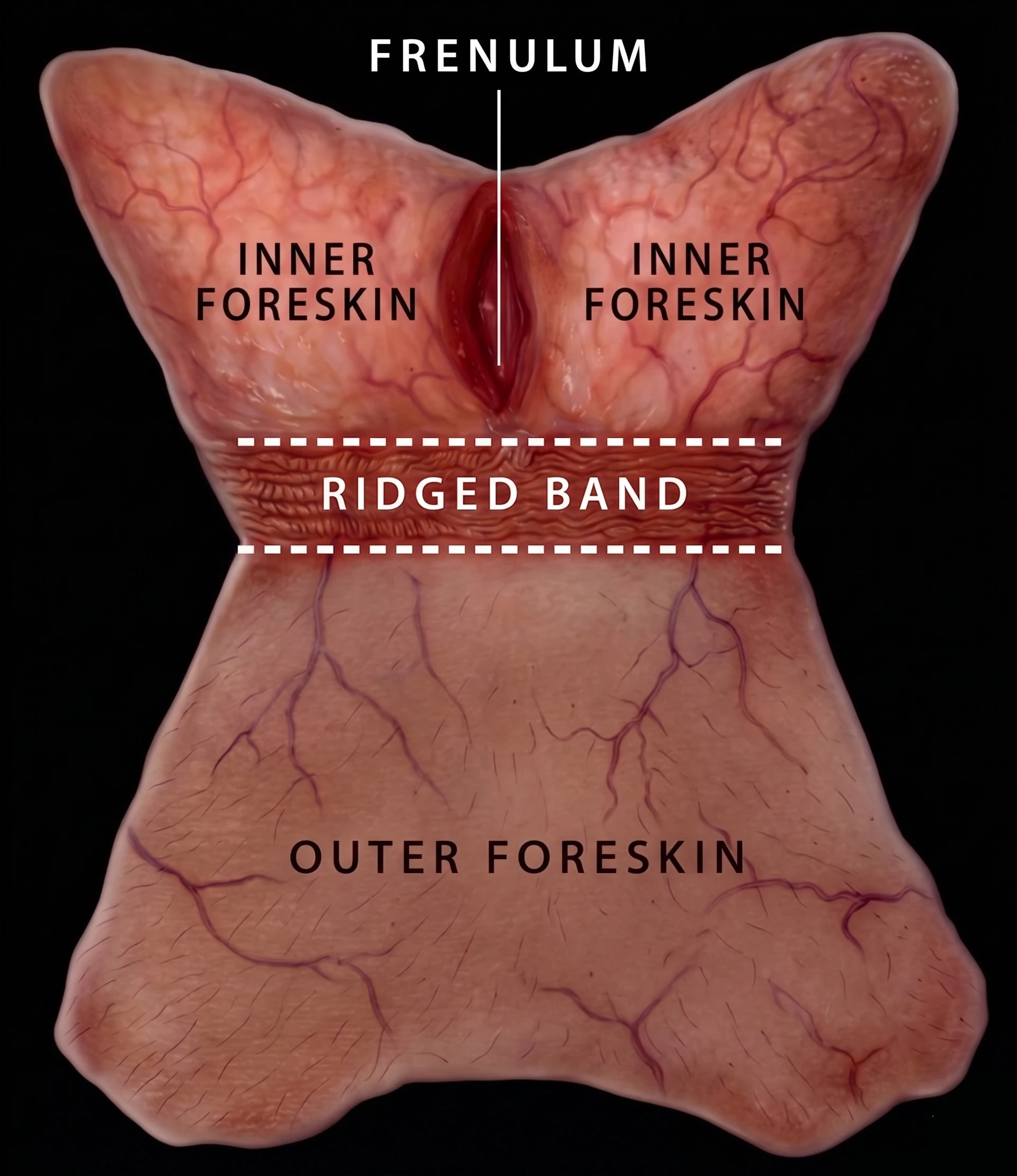
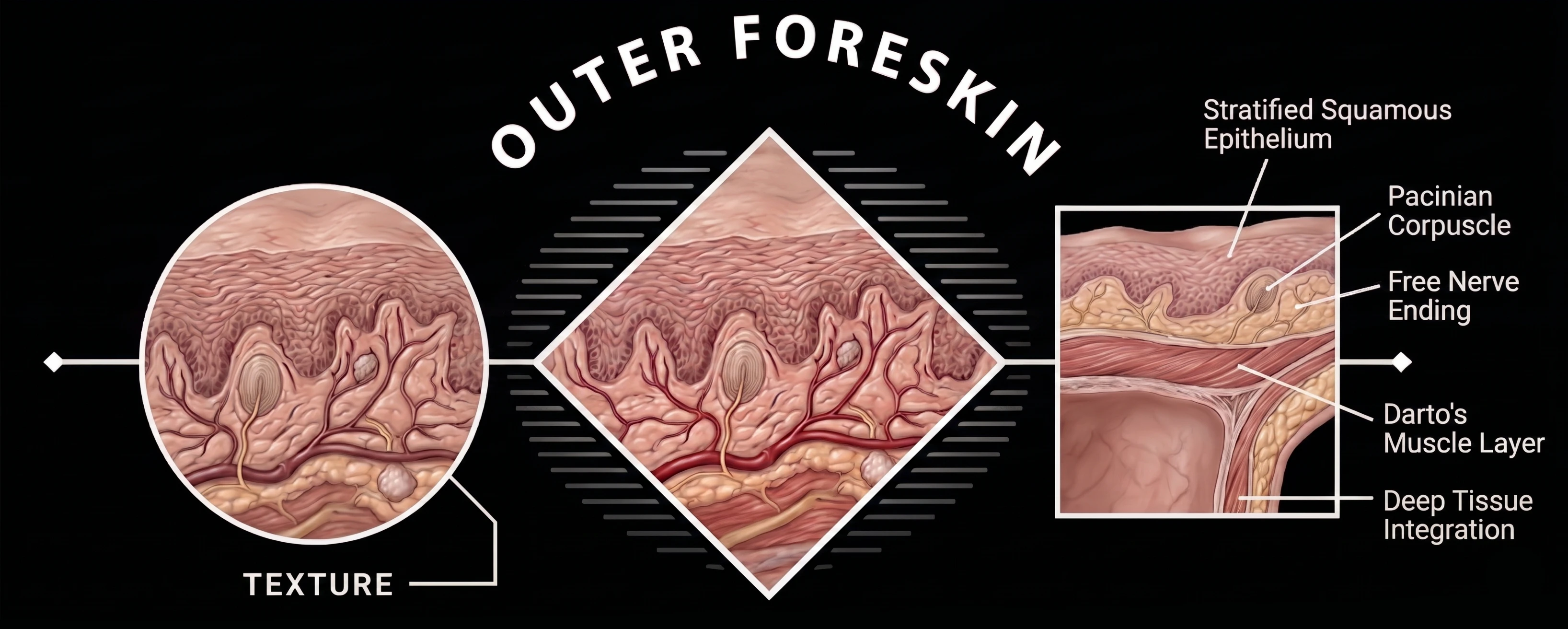
The Outer Foreskin
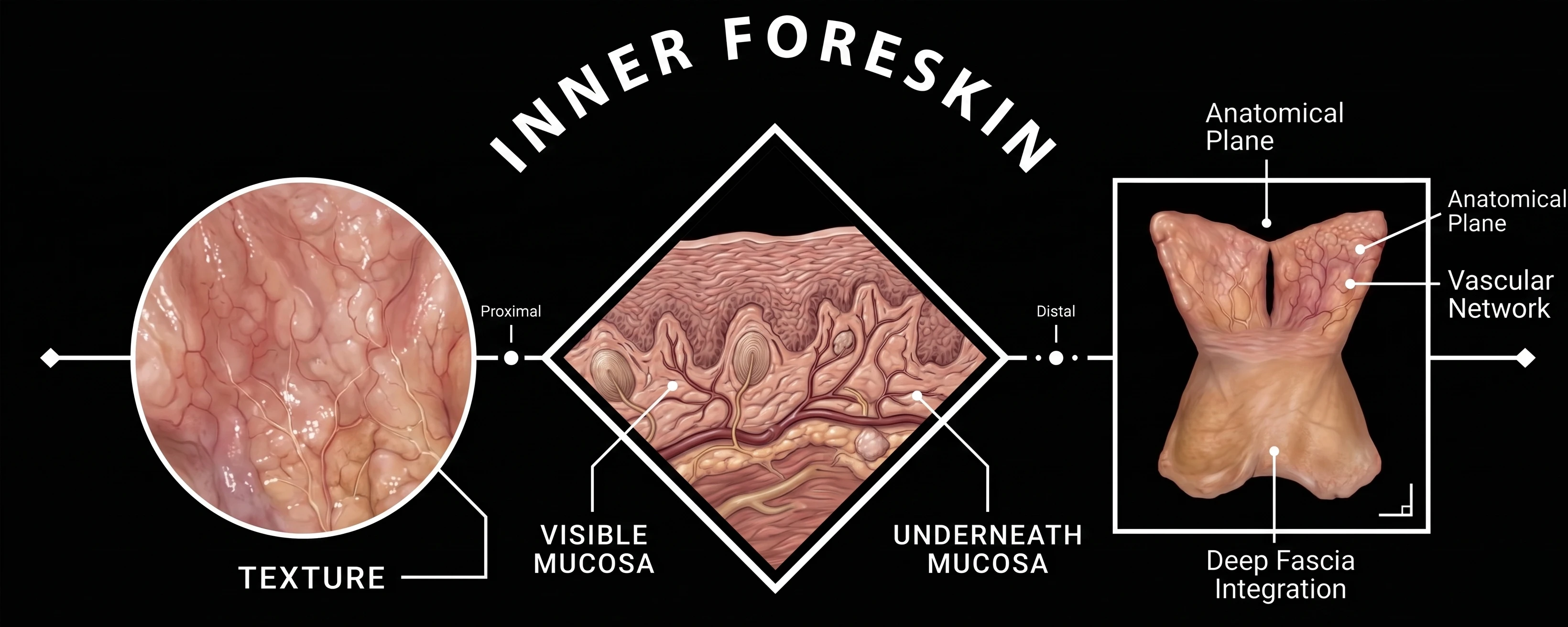
The Inner Foreskin
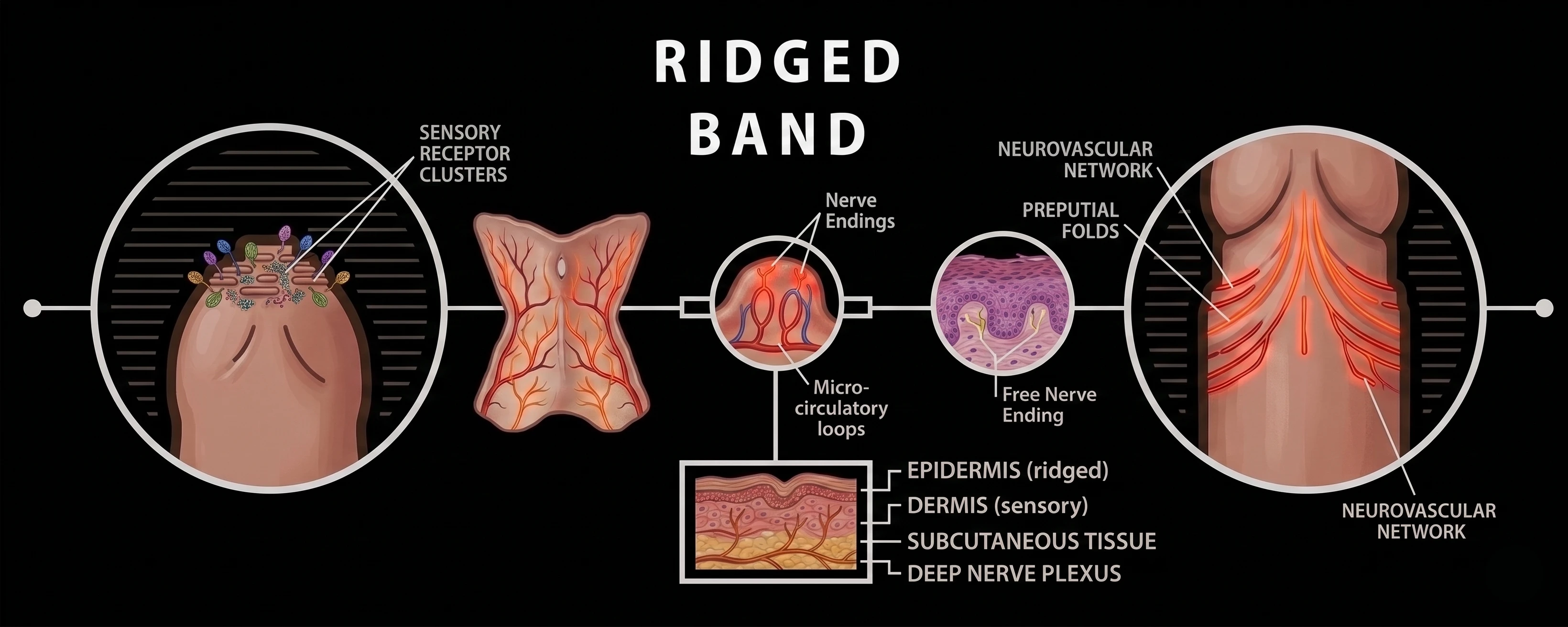
The Ridged Band
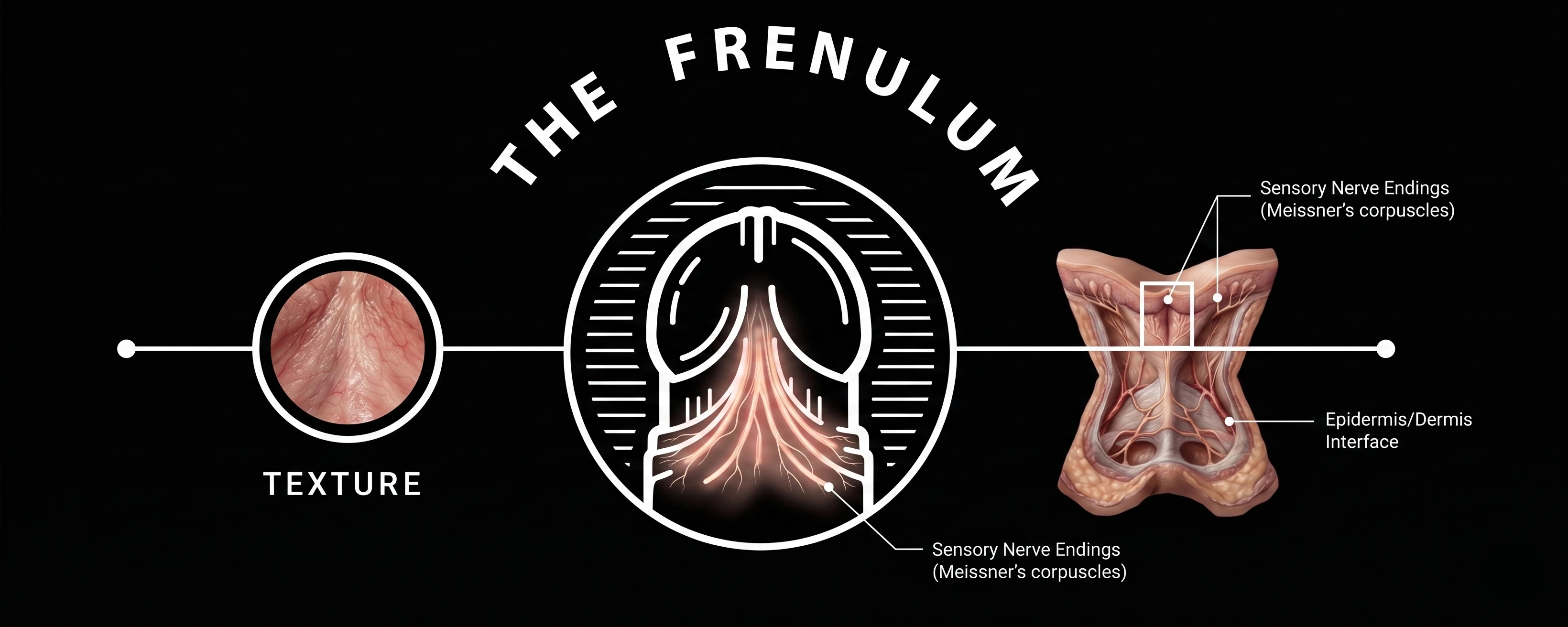
The Frenulum
Structure
Understanding Complexity and Shape
Far more than just a 'flap of skin', the foreskin is highly vascularized and innervated, serving several biological functions including blood flow, protection, and sensation. The illustrations below pair each labelled structure with what it does.
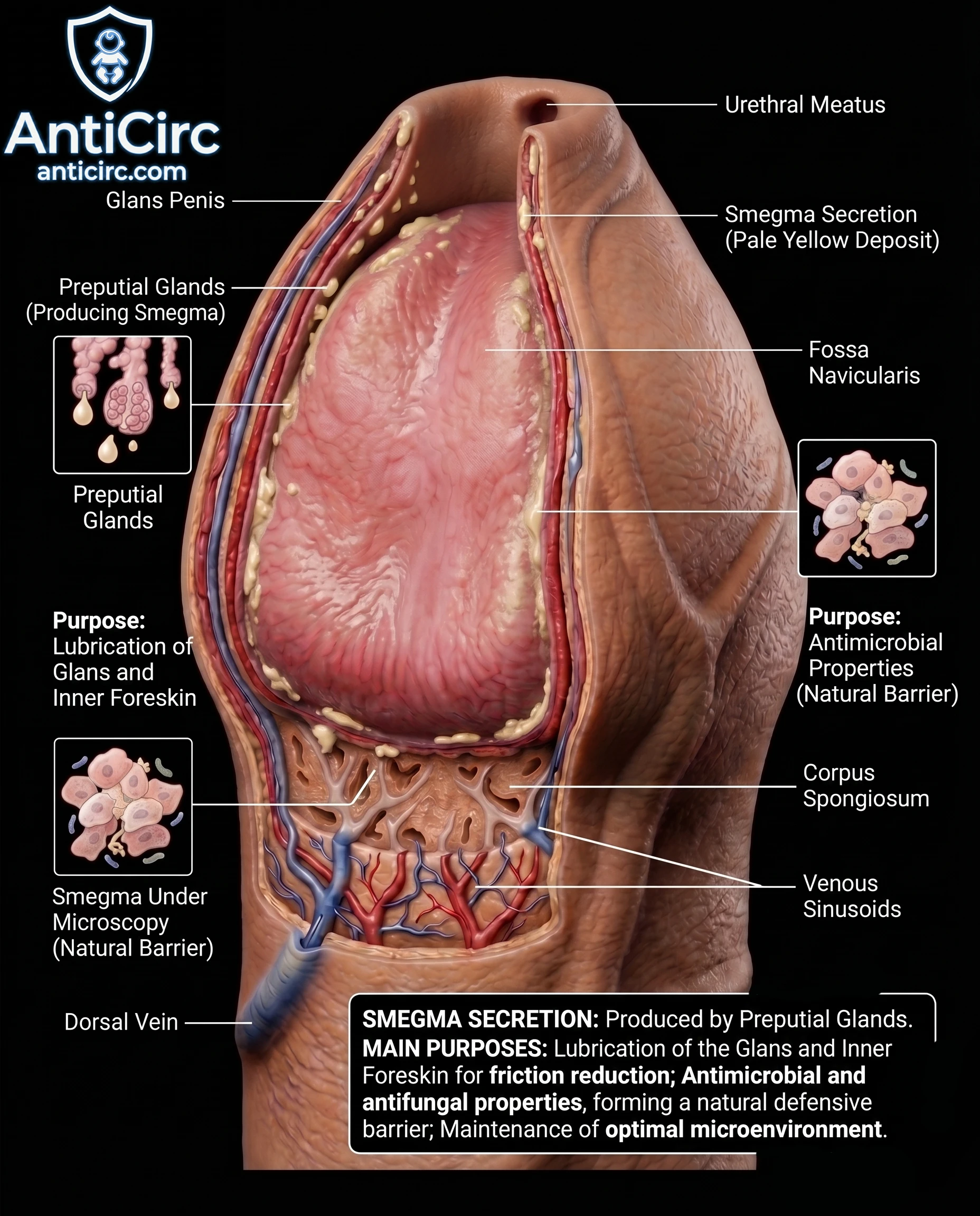
Blood flow, nerves & natural lubrication
A dense network of vessels — the dorsal vein, venous sinusoids and the corpus spongiosum — keeps the tissue richly supplied with blood. The preputial glands produce smegma, which lubricates the glans and inner foreskin.
- Dorsal vein
- Venous sinusoids
- Corpus spongiosum
- Preputial glands
- Fossa navicularis
- Smegma (lubrication)
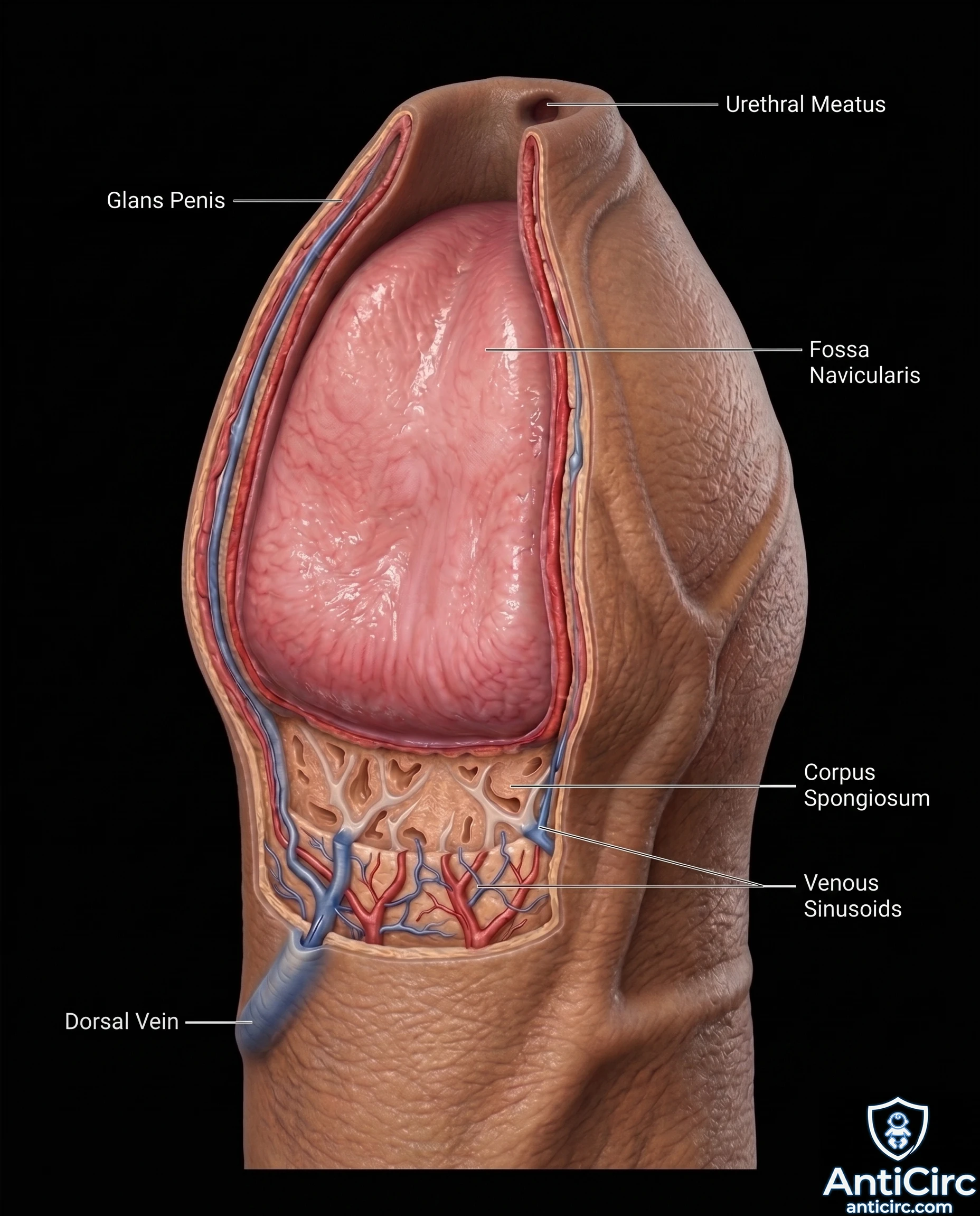
A bi-layer, butterfly-shaped structure
The foreskin is two layers in one: an outer skin continuous with the shaft, and a smooth inner mucosa resting against the glans. Unfolded, it forms a distinctive butterfly shape.
- Outer skin layer
- Inner mucosa
- Glans penis
- Urethral meatus
- Butterfly shape
- Intact coverage
Function
What does it do?
Protection
Sexual Activity
Lubrication
Sexual Sensation
Immune System
Skin Gliding
Mechanics
The Foreskin During Intercourse
Beyond static anatomy, the foreskin plays a mechanical role during sex. These illustrations contrast the intact gliding mechanism with the circumcised state, including how each interacts with a condom. Individual experiences vary; this is a general educational overview, not a clinical claim.
Intact: gliding & protection
Preserved sensitivity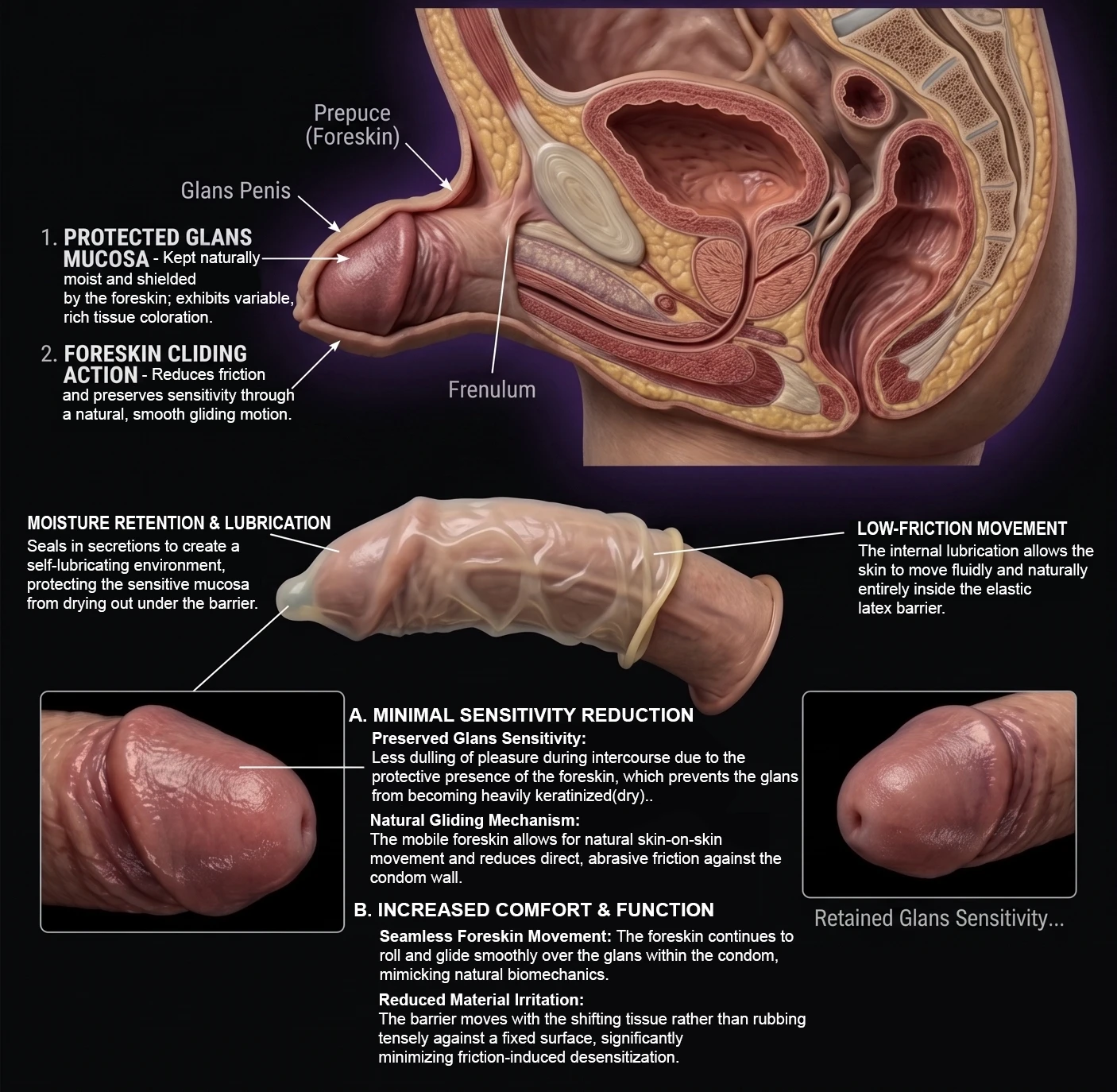
- Protected, moist glans.The stays shielded and naturally moist beneath the .
- Gliding action.The mobile rolls over the , reducing friction and preserving sensitivity.
- Self-lubricating.Secretions are retained, creating a smooth, self-lubricating environment.
- Low-friction movement.Skin glides fluidly — including inside a condom — rather than rubbing against a fixed surface.
Circumcised: friction & dulling
Cumulative sensitivity loss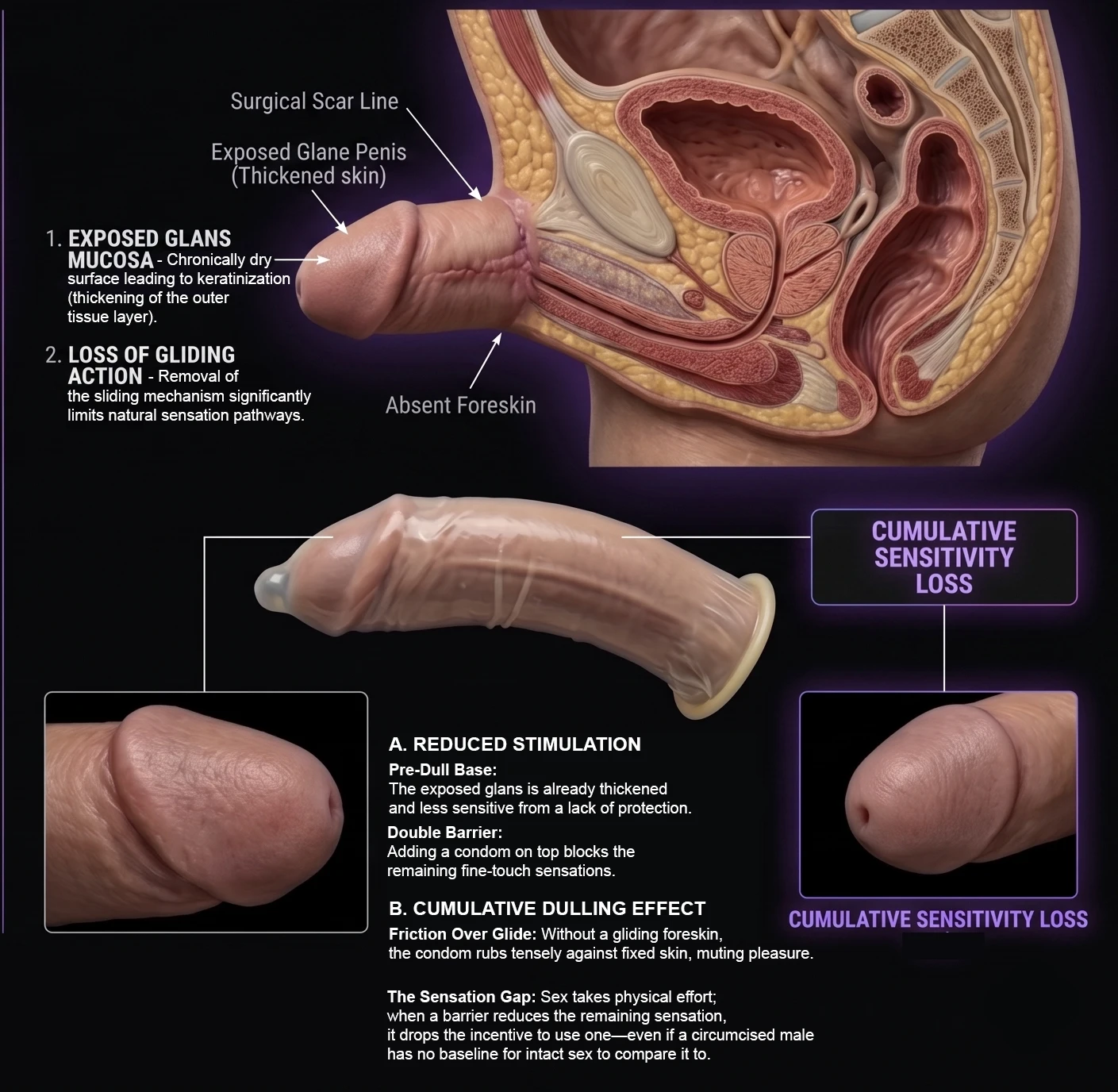
- Exposed glans mucosa.A chronically dry surface leads to (thickening) of the outer tissue layer.
- Loss of gliding action.Without the sliding mechanism, natural sensation pathways are significantly reduced.
- Friction over glide.A condom rubs tensely against fixed skin rather than gliding, which can mute sensation.
- Cumulative dulling.A pre-dulled base plus an added barrier compounds the reduction in fine-touch sensation.
Mechanisms such as gliding and keratinization of the exposed glans are anatomical; sensitivity outcomes are commonly reported and vary between individuals.
Interactive
Explore the structure & what is lost
Toggle between the intact structure and a surgically modified state to see which specialized tissues — the inner mucosa, ridged band, and frenulum — are removed.
Tissue Loss Visualizer
Schematic cross-section of specialized preputial tissue.
Significance
Why does it matter?
A Natural Fully Functioning Part of the Male Body
Psychological and Emotional Wellbeing
Bodily Integrity and the Ethical Problem
The Potential of Tissue Engineering
Learn More
Understanding the anatomy and function of the foreskin is the first step toward making informed, consent-respecting decisions about circumcision.