

LogoAntiCirc
The Surgery & Its Consequences

Circumcision

What it removes, how it's done, and what's lost for a lifetime — with the key research broken down in plain language.

What Is Circumcision?

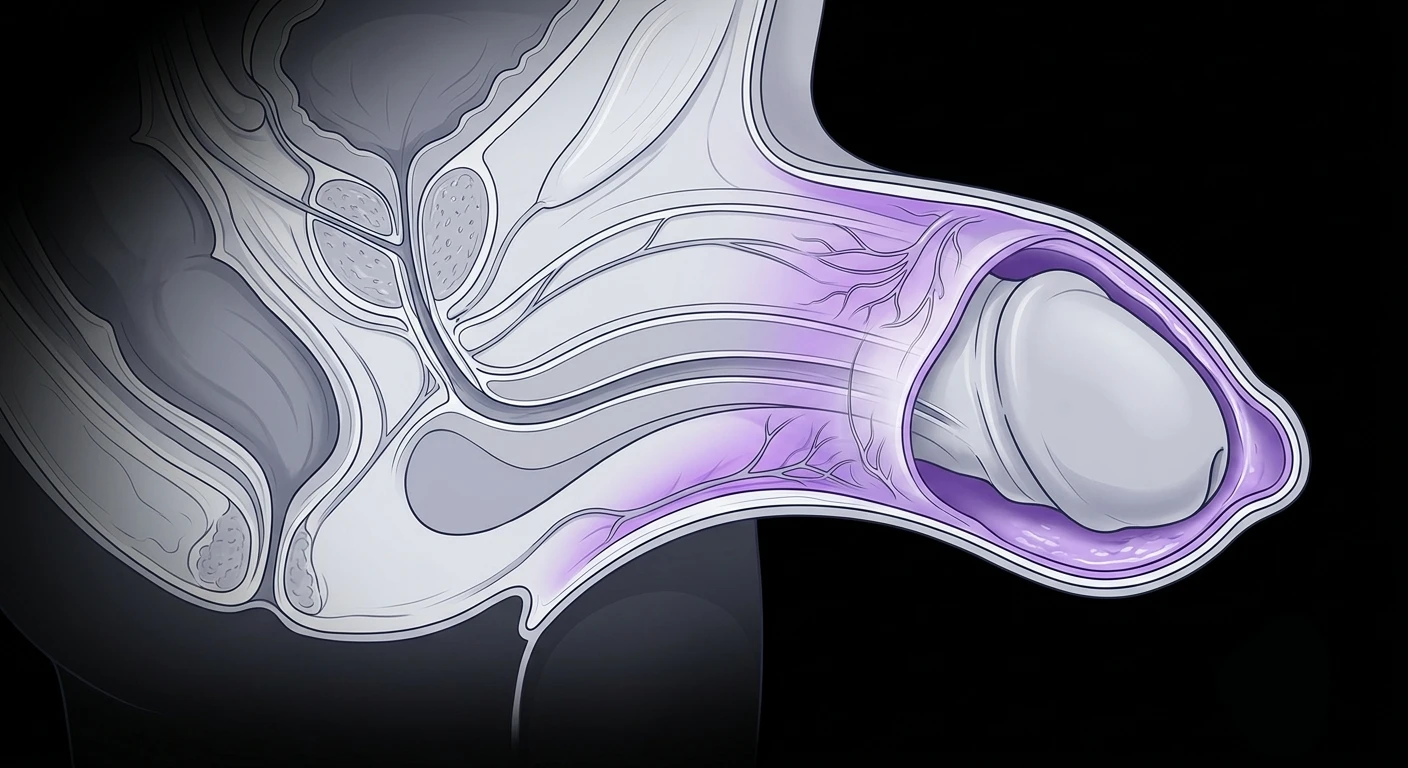
Circumcision is surgery that permanently removes the foreskin from the head, or glans, of the penis. All four specialized structures of the foreskin are removed, and every purpose they serve is lost.

That means the outer and inner layers of the foreskin, the frenulum, and the ridged band are cut away for good. It is usually performed on newborns, but can also be done on older children and consenting adults for personal or religious reasons.

Circumcision is not medically necessary.

Medical illustration describing circumcision

How Is Circumcision Performed?

In the most common procedure the foreskin is opened, the natural adhesions binding it to the glans are torn away (in infants and young children), and it is separated from the glans. A circumcision device is then placed, and the foreskin is cut off.

The frenulum — a highly sensitive band of tissue — is often partially or fully removed. The surgery is frequently performed without pain medication.

Note: A child's foreskin does not naturally retract from the head of the penis until somewhere between roughly age 6 and the onset of puberty — sometimes later. Forcing it open to remove adhesions makes the surgery more invasive.

Types of Circumcision Procedures

Three common methods are the Gomco clamp, the Plastibell device, and the Mogen clamp. All three pinch the foreskin to cut off circulation and limit bleeding while the doctor cuts. The surgery lasts 15–30 minutes.

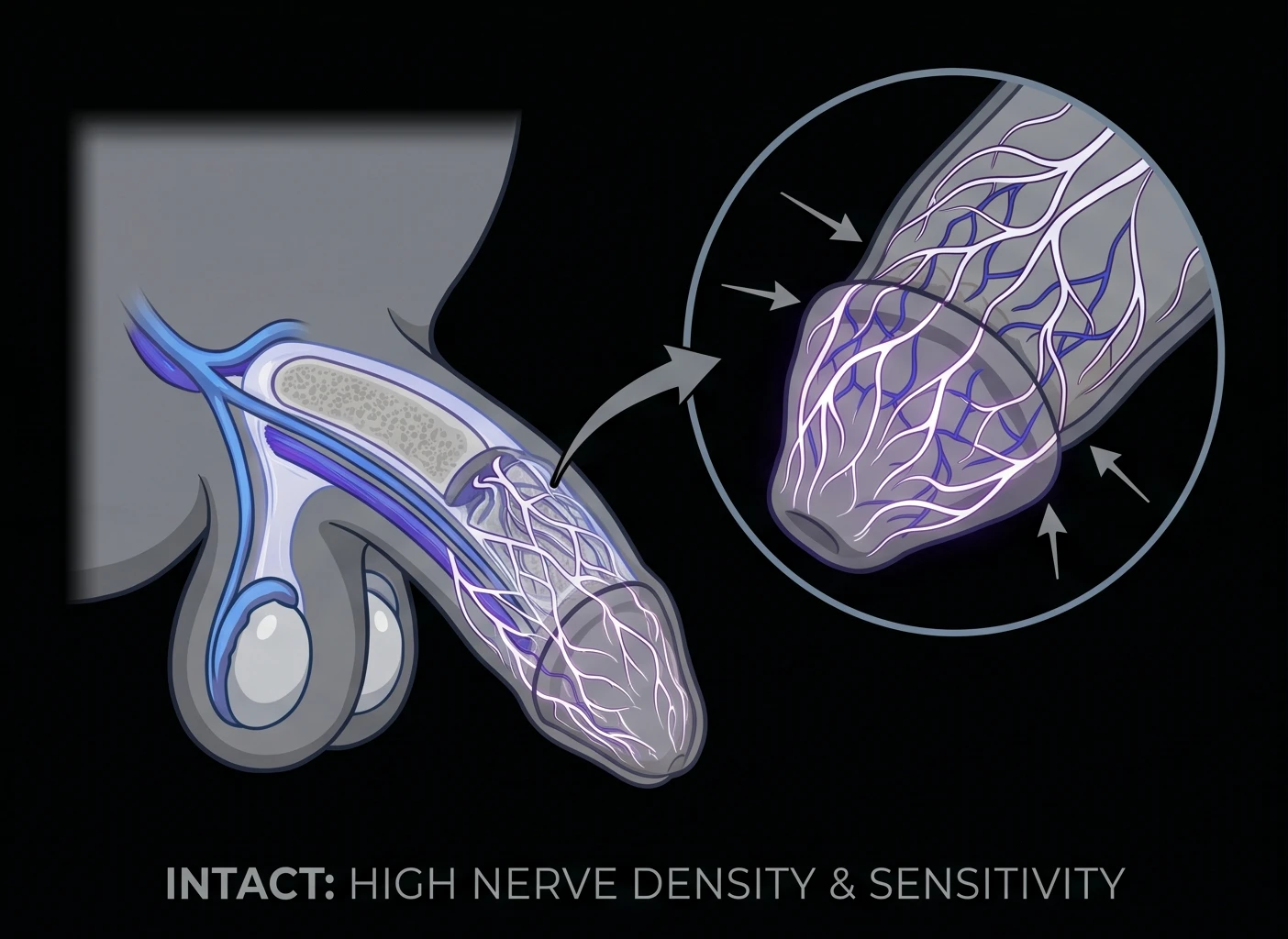
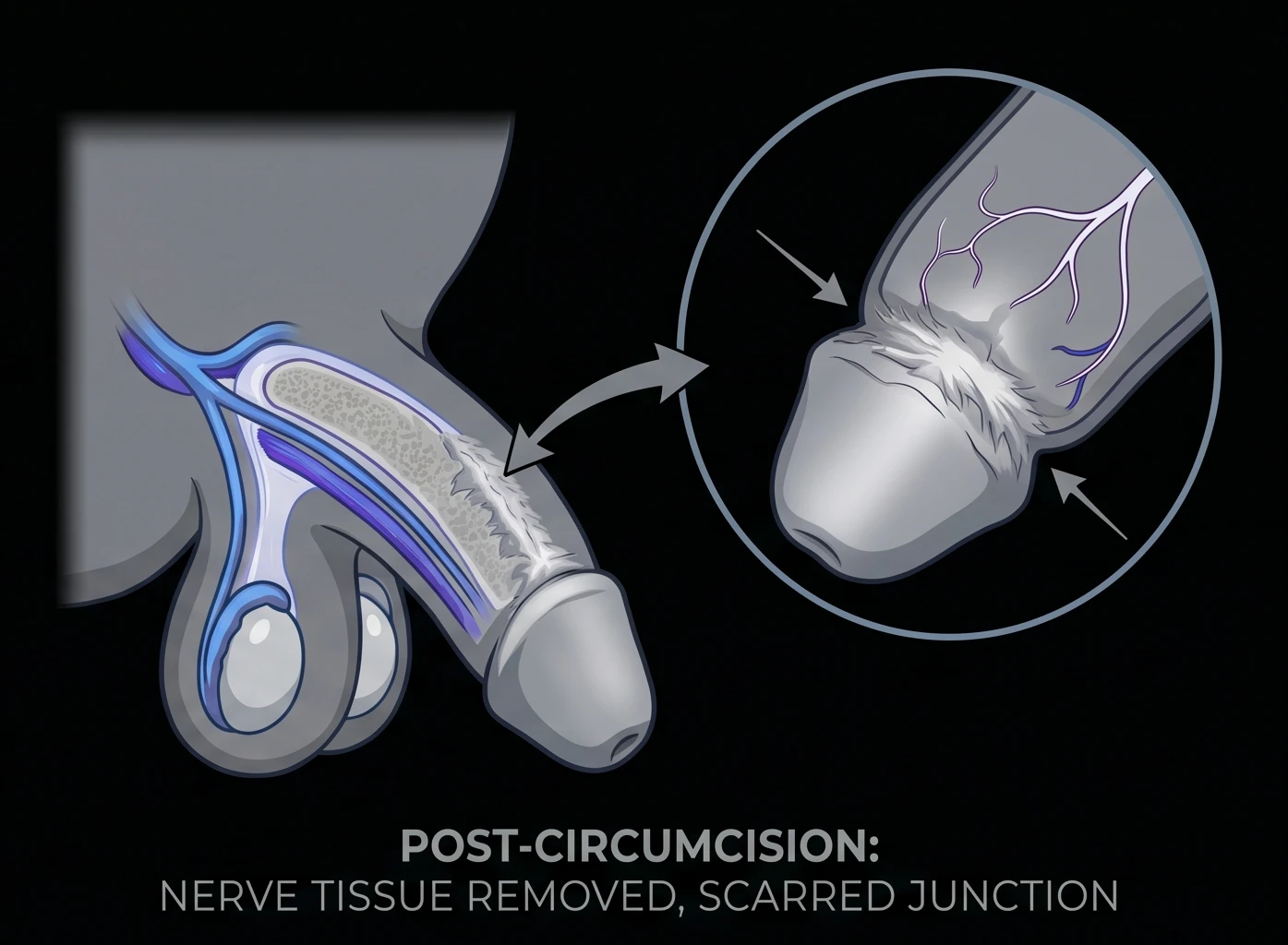
Intact penis showing high nerve density and sensitivityPost-circumcision: nerve tissue removed, scarred junction
The dense nerve network of the foreskin (top) is what gets removed — leaving the scarred junction below (bottom).

What Do Infants Experience?

Dense with nerve endings, the foreskin is among the most sensitive parts of the body. Circumcision is extraordinarily painful.

Scientists have measured the physiological changes in newborns subjected to this surgery: sharply increased breathing rates, crying, blood pressure, and stress hormones.

Afterward, babies routinely show signs of post-traumatic stress — decreased appetite, disrupted breastfeeding, reluctance to interact with mothers and caretakers, altered sleep, and diminished REM sleep.

The Measured Physiological Response

A newborn can't say he's in pain — but his body shows it. Here's what researchers recorded.

Cortisol (stress hormone)

Relative level in the blood

Baseline
3–4×
During & after

Cortisol rises three- to four-fold and stays elevated for days after surgery.

The brain's pain response

Adult pain-processing regions activated

18 of 20 regions the adult brain uses to process pain light up during circumcision.

Also sharply elevated

Recorded throughout the procedure

  • Heart rate
  • Blood pressure
  • Breathing rate
  • Stress hormones
  • Crying / distress
How this was measured — and the source

Long-Term Consequences

The foreskin is functional tissue. Its loss carries permanent costs.

Keratinization

The glans hardens, developing rougher, thicker skin that dulls sensitivity even further — the result of constant exposure to abrasive materials like underwear.

Lost Immunity

The foreskin's immune-system benefits and natural anti-bacterial agents, which help keep the glans clean, are gone.

Permanence

The foreskin is healthy tissue designed by nature to protect the glans. Its removal is permanent and cannot be undone.

Psychological Effects

Effects can be lifelong: altered attitudes toward the body and one's sexuality, dissatisfaction with sexual pleasure, and a strong sense of having been physically invaded.

Sensitivity & Pleasure

The inner foreskin, packed with nerves, stimulates the glans and provides sexual pleasure — and circumcision permanently denies men that. Without the natural lubrication created between the inner foreskin and glans, sex can become painful for both partners. The frenulum, with its nerve endings and blood supply, is destroyed. See the research →

Medical illustration describing circumcision

Do the Benefits Outweigh the Losses?

Circumcision carries both short- and long-term complications, while the foreskin itself has known natural functions and benefits. Together they raise the real question: are there any potential benefits that justify this permanent loss?

And what about ethics — the child's right to bodily integrity, and his inability to consent? The harms and risks of any surgical procedure should never outweigh its potential benefits.

Has the medical community normalized circumcision — and does it give parents enough information to make a truly informed decision?

It Isn't Only America

Circumcision is often discussed as a uniquely American practice — but it travelled. After the United States colonized the Philippines, the custom took root there too, where it's known as tuli. The country is predominantly Christian, and the New Testament does not require it; the practice is sustained by culture and social pressure rather than faith or medicine.

🇺🇸

United States

  • Performed on newborns, in hospitals, within days of birth.
  • Framed as a medical or hygienic choice made by the parents.
  • The infant is far too young to have any say.
🇵🇭

The Philippines — “tuli”

  • Near-universal, but usually performed at ages 9–14.
  • Often done at communal summer “mass circumcision” events.
  • Driven by peer pressure and the fear of being called “supot” — not medical need.
  • Traditional methods are sometimes done with little or no anesthesia.
  • In some traditions the boy is handed the blade to make the cut himself — framed as a test of bravery.
  • A 2019 cohort study of 1,577 Filipino boys found 69% of those cut ritually — and 51% of those cut medically — met the diagnostic criteria for PTSD.

The age and the justification differ; the loss does not. The same tissue and the same sensation are removed either way — and where traditional methods are used with little anesthesia, pain and infection risk are added on top. A different country, but the same unanswered question of consent: a boy bullied into it has no more chosen it than a newborn has.

Research, Explained

The studies cited above, broken down in plain language — with a link back to each original.

Does circumcision reduce sensitivity?

  • Researchers surveyed a large group of men — over 1,000 intact and around 300 circumcised — about what they actually feel during sex.
  • Circumcised men reported less pleasure and weaker orgasms, and said they had to work harder to climax.
  • They were also more likely to report numbness or odd sensations — burning, prickling, tingling — on both the glans and the shaft.
  • Men circumcised after puberty lost the most sensation, which suggests the foreskin's role is something you only notice once it's gone.

In short: The foreskin is a major source of sexual sensation. Removing it measurably dulls what a man can feel.

“Male circumcision decreases penile sensitivity as measured in a large cohort.”

Bronselaer et al. · BJU International, 2013

Is circumcision done with pain relief?

  • For much of modern medicine, newborns were assumed not to feel pain the way adults do, so circumcision was routinely performed with no anesthetic at all.
  • A landmark 1997 trial tested this directly, comparing real anesthesia against a placebo — the placebo standing in for the common “no pain relief” practice.
  • The babies given no pain relief cried in sustained, high-pitched distress with racing heart rates throughout. Two became so distressed they choked and briefly stopped breathing.
  • The results were stark enough that the researchers concluded no infant should be circumcised without anesthesia — and even the best numbing only blunts, never erases, the pain.

In short: Circumcision is genuinely, measurably painful, and many procedures have historically been done without adequate pain relief.

“Doctors Advocate Pain Relief for Circumcision.”

The New York Times, 1997 · reporting on Lander et al., JAMA, 1997

What happens in a baby's body during circumcision?

  • Scientists tracked the body's stress signals in newborns during and after the procedure.
  • Heart rate and blood pressure spike; the stress hormone cortisol jumps three- to four-fold and stays elevated for days afterward.
  • Brain studies show circumcision activates 18 of the 20 regions adults use to process pain.
  • The same line of research links this early stress to differences in adult men's emotional attachment and stress responses years later.

In short: A newborn's body responds to circumcision as a major painful stressor — and that stress may leave traces well beyond the day of surgery.

“Neonatal male circumcision is associated with altered adult socio-affective processing.”

Miani et al. · Heliyon, 2020

Can circumcision cause PTSD in boys old enough to remember it?

  • Researchers followed 1,577 Filipino boys circumcised in childhood — 505 in traditional ritual (“tuli”) settings and 1,072 in medical settings — and screened them with a standard PTSD scale.
  • 69% of the ritually cut boys met the full diagnostic criteria for post-traumatic stress disorder.
  • The medical setting didn't make it safe: 51% of boys cut by physicians, with anesthesia available, still met the PTSD criteria.
  • The authors concluded that non-therapeutic genital cutting of boys is psychologically traumatic regardless of who performs it or how clinical the setting is.

In short: When boys are old enough to remember it, circumcision leaves measurable trauma — and a hospital setting roughly halves nothing: a majority were traumatized either way.

“Post-traumatic stress disorder (PTSD) among Filipino boys subjected to non-therapeutic ritual or medical surgical procedures.” Also reference #53 in our library.

Boyle & Ramos · Annals of Medicine and Surgery, 2019

More Info

Footnotes & sources

[1] A circumcised penis is actually markedly less hygienic in infancy, as feces and urine come into contact with the exposed glans. The foreskin is there to protect this delicate structure from these and other contaminants.

[2] Some may deem breast tissue and foreskin tissue a false equivalency. The relative importance of the tissue and the scarring imposed is specific to each individual and cannot be known for a neonate. The simple fact that adult men and women do not volunteer for circumcisions or mastectomies in large numbers speaks volumes about the future preferences of your child.

[3] These studies, of course, receive little media attention.

[4] The U.S. also has one of the highest rates of sexual violence.