
Retainers: Keeping Coverage as You Grow
Once skin can stay forward, retainers keep the glans covered between sessions — the other half of restoration. Approaches, hygiene, and cautions.
Why retain
Tension grows skin; retention puts it to work. Keeping the glans covered between sessions lets the keratinized surface layer soften — the change behind most reported sensitivity recovery — and keeps new slack positioned forward instead of slipping back. Retention becomes possible somewhere around mid-restoration, when skin will stay over the glans with only a little help, and from then on most restorers treat it as the default state.
The common approaches
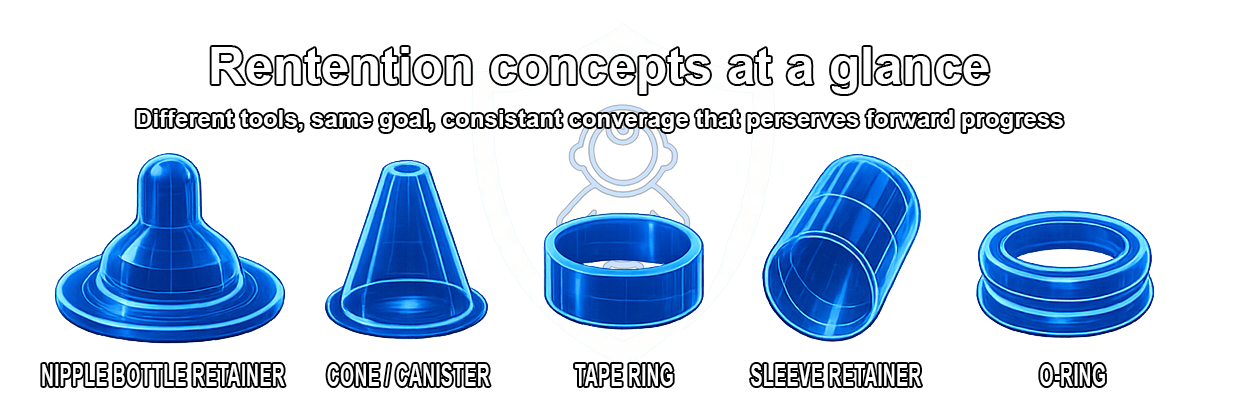
- Bottle-nipple retainer — a clean silicone baby-bottle nipple worn over the glans under the rolled-forward skin. Free, soft, replaceable; the community’s perennial starter.
- Cone and canister retainers — light shells that hold skin forward by shape alone; some restorers repurpose small medical cups, others buy purpose-made versions (see the device comparison).
- Tape rings — a narrow band of skin-friendly tape around the overhang holds the tip closed. Cheap and invisible, with the usual adhesive-care rules from T-taping.
- Sleeve retainers — soft silicone sleeves worn over the skin tube; comfortable for long wear once sizing is right.
- O-rings — small soft rings seated in the overhang to keep the tip gathered; an experienced-restorer option that demands careful sizing.
Hygiene and skin care
A covered glans is a new microclimate. Wash and fully dry anything worn against skin daily (silicone tolerates boiling); give the area air time every day; and expect an adjustment period in which the surface feels oversensitive before it settles. Any persistent irritation, odor, or discharge means stop retaining and let things normalize — and see a clinician if it doesn’t.
Cautions
- Nothing worn on the body should ever be tight enough to mark the skin, trap heat painfully, or affect urination.
- Rings and sleeves must come off for erections if they constrict — anything that can act as a constriction band is sized wrong.
- Start with hours, not days; no overnight wear until a retainer has proven itself comfortable and trivially removable.
This technique was documented and refined over many years by the RestoringForeskin.org community (2009–2026). This guide is AntiCirc’s own write-up of the method, published as that community’s public home went offline — see the sources below.