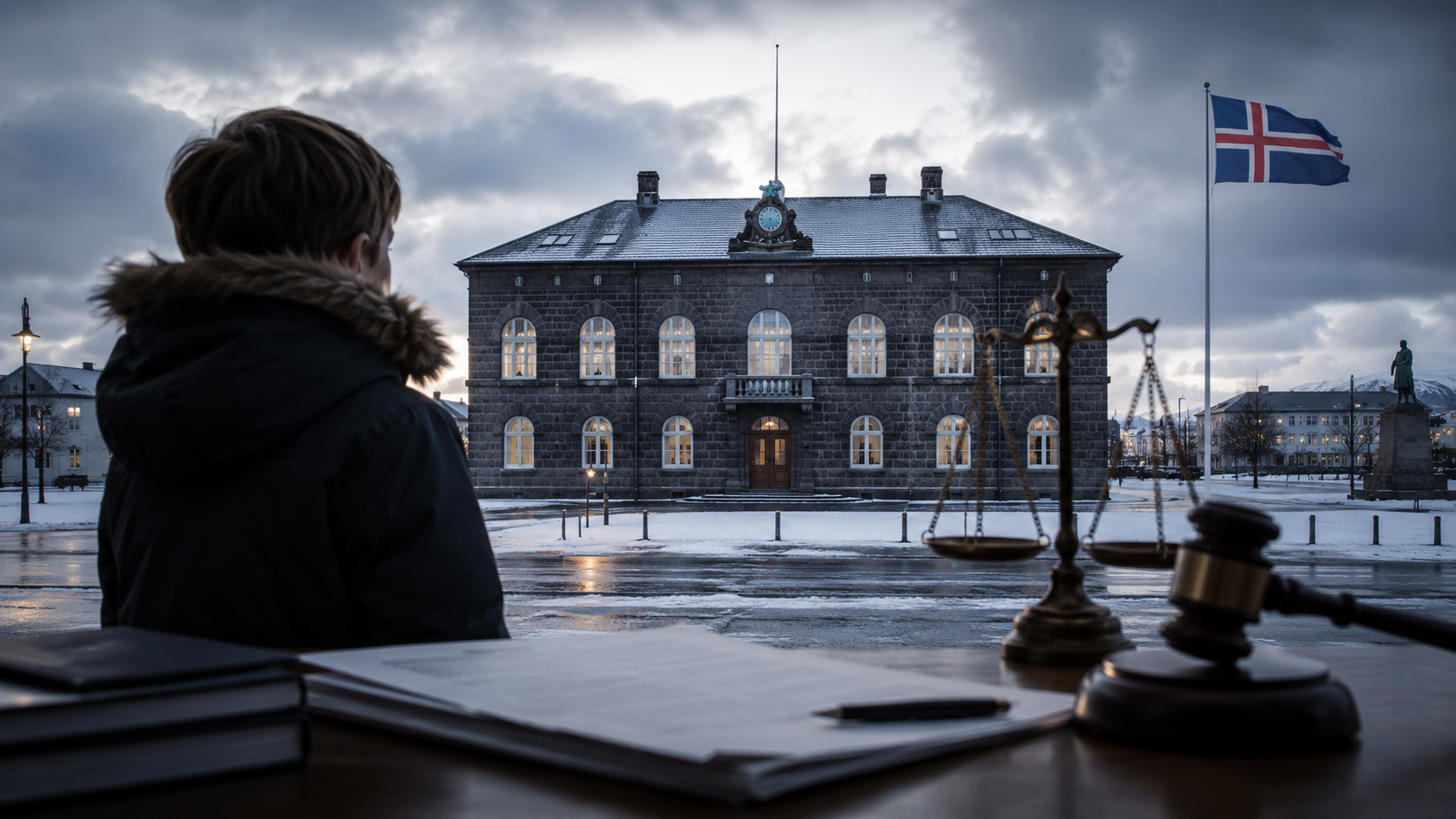
In 2018, Iceland came within a parliamentary debate of becoming the first European country to ban non-medical circumcision of minors, proposing to treat it alongside female genital cutting as a violation of children's rights.
The bill drew fierce pushback on religious-freedom grounds and was ultimately shelved — but it moved the Overton window across Europe and put the question on the record.
AntiCirc's view: the Icelandic proposal forced the right question into a national legislature — should children have the same legal protection from non-consensual genital cutting regardless of sex? That the bill stalled doesn't make the question go away. It makes it the debate of the coming decade.
In 2018, Iceland came within a parliamentary debate of becoming the first European country to ban the non-medical circumcision of minors. A cross-party bill, led by a Progressive Party MP, proposed to treat the practice alongside female genital cutting as a violation of children's rights — with penalties of up to six years' imprisonment for removing part of a child's genitals without a medical reason.
What the bill proposed
The logic of the bill was consistency. Iceland, like the rest of Europe, already prohibits all non-medical cutting of girls' genitals, however minor. The proposal asked why the same protection should not extend to boys. It framed circumcision not as a religious or cultural entitlement of parents but as an irreversible intervention on a child who cannot consent — and therefore as a question of children's rights, to be judged by the same standard regardless of the child's sex.
The backlash
As NBC News and other outlets reported, the response was immediate and international. Jewish and Muslim organisations across Europe, along with religious leaders and some governments, condemned the bill as an attack on religious freedom and on the survival of their communities in Iceland. The pressure was considerable for so small a country, and the bill was ultimately shelved without becoming law. Its supporters had underestimated how fiercely the established exemption for boys would be defended.
Why it mattered anyway
Defeat did not equal failure. For the first time, a national legislature had been forced to debate, on the record, a question most prefer to avoid: should children have the same legal protection from non-consensual genital cutting regardless of their sex? Iceland did not settle it in law, but it put it on the agenda across the continent — and it sits within a broader Nordic willingness to scrutinise the practice, where children's-rights advocates and medical bodies have repeatedly questioned non-therapeutic circumcision. The Overton window moved, and it has not moved back.
Our view
The bill stalling did not make the question disappear; it sharpened it. The asymmetry the proposal exposed — robust legal protection for girls' bodies, an inherited exemption for boys' — is difficult to defend once stated plainly. Iceland was simply the first to say it out loud in a parliament. The debate it forced open is, we think, the debate of the coming decade.