
What are the health benefits and harms of newborn circumcision?
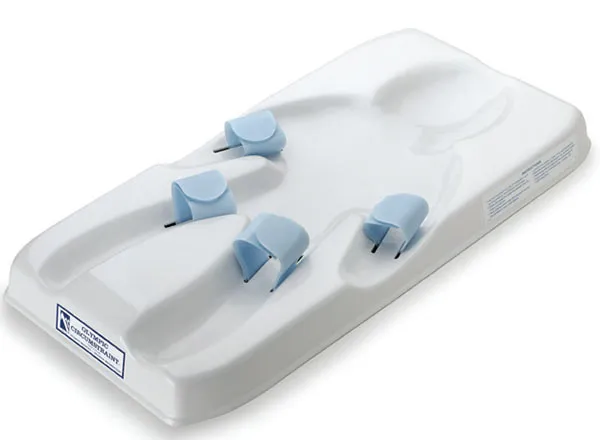
We now know that newborn circumcision does not provide any known health benefits for either boys or men, as some once believed.
Circumcision is painful and traumatic for babies, can result in guilt and regret for parents, and can cause significant physical, psychological, and sexual harm to men.
Boys and men of all ages benefit from keeping their foreskins. Babies' caregivers and men's sex partners also benefit.
Benefits vs. Harms for Babies
Claimed Benefits of Circumcision
Social Acceptance?
Some parents worry their intact boys will be teased. Circumcision is much less common now, so your intact son will be in good company. More importantly, children are teased for many reasons and need to be taught how to handle such misbehavior.
Cleanliness?
In baby boys, the foreskin is attached to the glans and protects it from urine, feces, and abrasion. Surgical removal creates an open wound requiring care at every diaper change. Parents can teach sons good penile hygiene: Retract–Rinse–Replace.
Smell?
The human body has many areas that emit odor (armpits, anus) yet we don't amputate these. Boys can learn to retract their foreskin when urinating and wash when necessary.
Disease Prevention?
UTIs are 8x more likely in girls than boys—even circumcised boys—and are easily treatable with antibiotics. Babies are not at risk for STIs; as they grow, they should be taught about safe-sex practices. [13][14]
Earlier is Better?
Babies feel pain as much or more than adults, with negative effects lasting months or years. Very few adult men will ever need or choose to remove their foreskins.
Harms and Risks of Circumcision
Trauma & Pain
Only about half of boys receive any pain killer, and even then, the most powerful analgesics do not eliminate all pain. Some babies go into shock. Severe pain in infancy can have long-term neurological and psychological consequences. [15][16]
Physical Damage
Circumcision leaves a scar. Scar tissue is not as resilient, and can "tether" the penis and restrict growth. The adult circumcised penis is, on average, 4mm less wide and 8mm shorter than intact. [37]
Injury or Death
While the risk of death is low, deaths do occur from blood loss or infection. About 1 in 11,000 circumcised boys will die from circumcision-related causes. [17]
Infection
Circumcision creates a raw, open wound exposed to urine and feces in the diaper. The intact penis has no such open wound.
Complications
Complications include scarring, skin bridges (adhesions), painfully tight erections, bent penis, and very often meatal stenosis (narrowing of the urinary opening). [18]
Benefits vs. Harms for Adult Men
There is no evidence that the foreskin causes disease, nor that removing it makes men healthier. Only 1 in 250 adult men will ever need to be circumcised to treat a medical problem. [19]
Claimed Benefits
Hygiene
Contrary to claims that the foreskin is unclean, it has a protective function. Its loss makes the penis more vulnerable to abrasion and injury. Washing takes just a few seconds.
STI Prevention
There is no evidence that being circumcised prevents STIs, including HIV. Only abstinence or safe sex can do that. [20]
Sexual Attractiveness
Some parents believe their sons will be less attractive to women. We've heard from both men and women that this is not the case. As the intact penis becomes more common, culture will accept it as normal.
Penile Cancer
Penile cancer is extremely rare, accounting for less than 1% of cancers in American men. The American Cancer Society does not recommend circumcision for prevention. [21]
Harms and Risks
Impaired Sexual Sensation & Function
The foreskin is a sensory organ with thousands of nerves and blood vessels as well as muscular tissue. It plays an important role in foreplay, sexual activity, pleasure, and ejaculation.
Risk of Impotency
Circumcised men are 3-4x more likely to experience erectile dysfunction (ED) than intact men. [22][23]
Risk of Emotional Harm
Emotional harm has been widely reported—men who struggle with feelings of betrayal, and parents who regret a decision impossible to reverse. Many men are working to restore their foreskins to feel "more whole."
What is the Purpose of the Foreskin?
The foreskin is a normal, functional body part. Because circumcision is still common in the United States, many Americans have never seen a natural penis. However, the foreskin is present in all mammals and exists to serve a protective role and to facilitate reproduction.
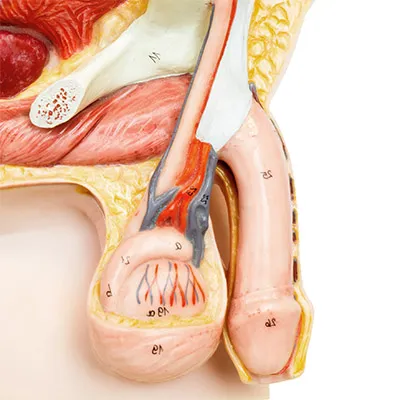
Functional Evolutionary Design
The foreskin—present in all mammals—evolved to serve both a protective and reproductive role.
Body Intelligence
In the womb, infancy, and through puberty, the foreskin develops in a very specific way, responding to hormones and the body's DNA.
Natural Protection
The foreskin protects against feces and urine in the diaper, and other external irritants. It slowly becomes retractable as the child grows. The age of retraction varies greatly. [24]
The Anatomy
(tap or hover over images to un-blur)
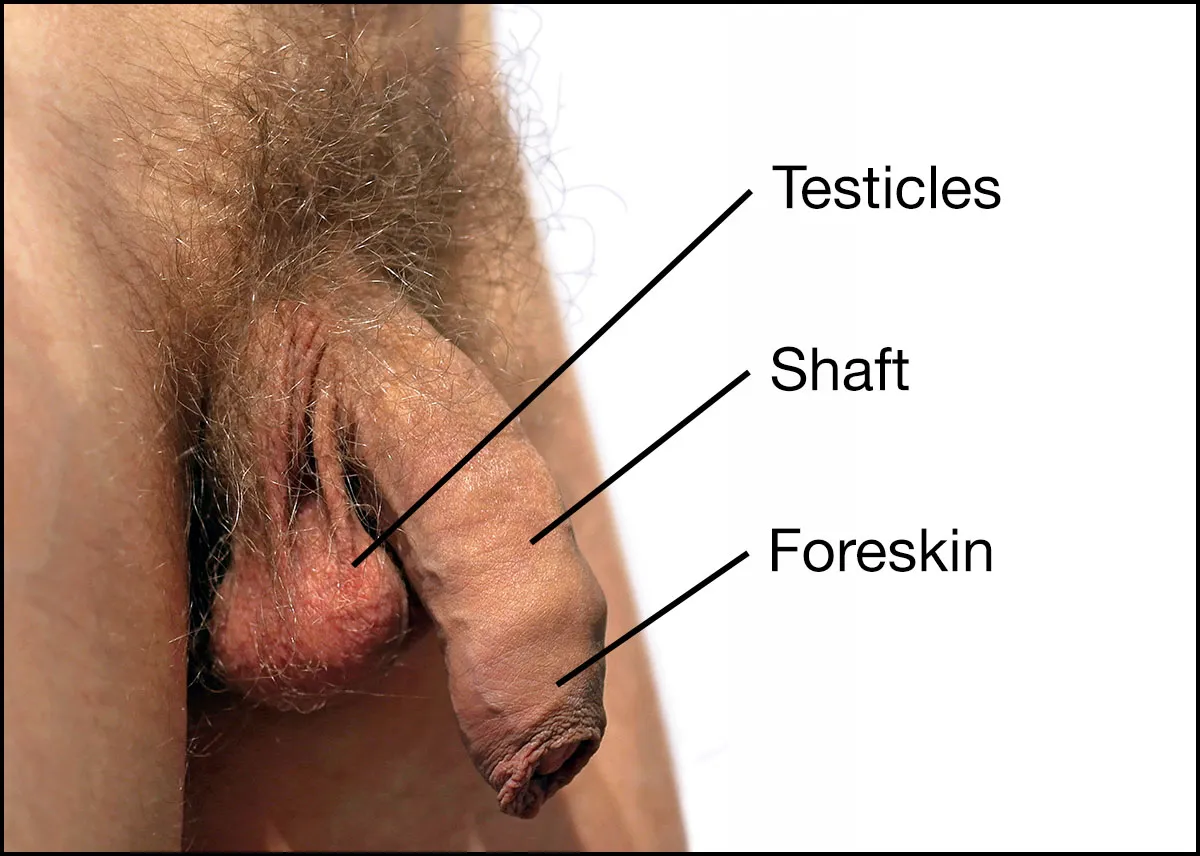
Penile Anatomy
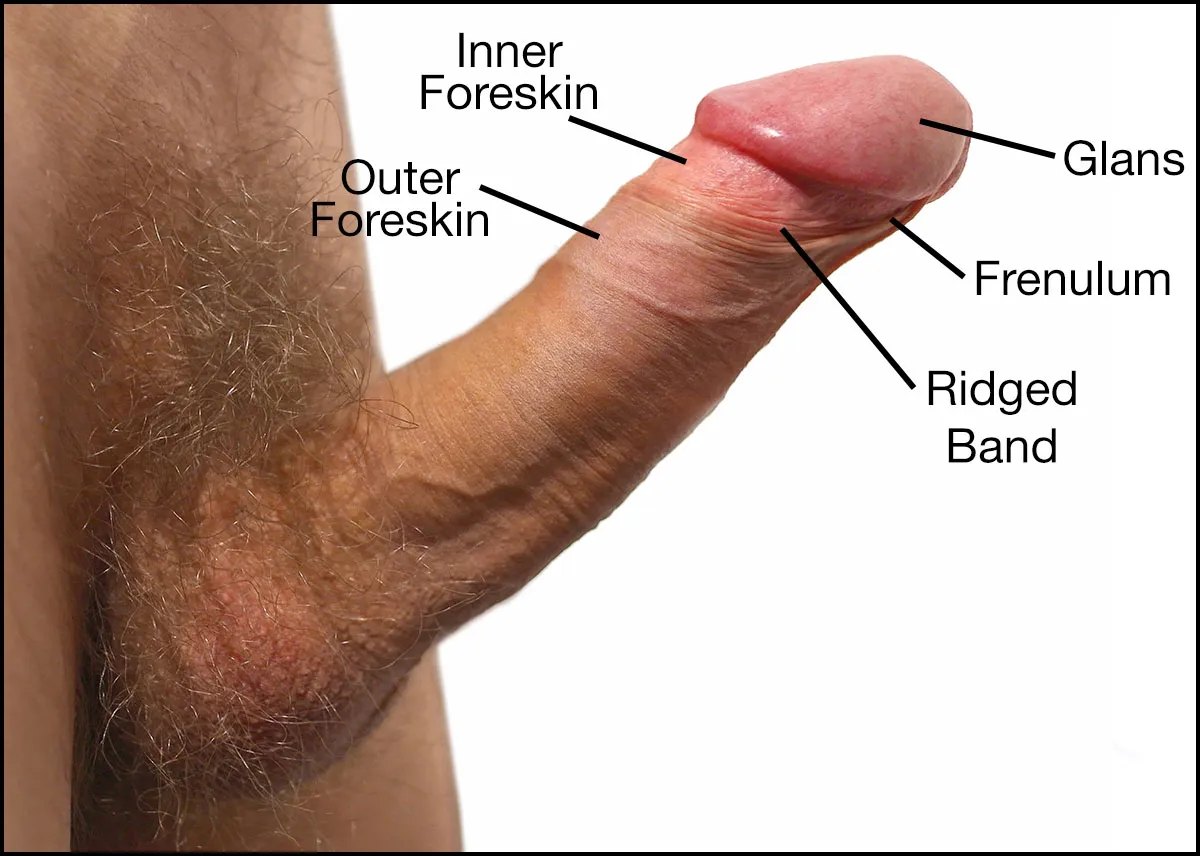
The foreskin is not "extra skin," but a specialized, double-layered structure containing nerves, blood vessels and muscles.
Protective Covering
When flaccid, the foreskin covers the glans and meatus, protecting them from irritants and chafing.
Sensory Organ
When erect, the foreskin rolls back, exposing the glans, frenulum, and inner foreskin with its ultra-sensitive ridged band containing about the same nerve endings as the female clitoris. [25]
Sexual Function
The foreskin plays an indisputable role in intercourse. The inner surface, with the smooth glans, eases penetration and reduces friction, greatly increasing both partners' pleasure. [26]
Circumcised Penis
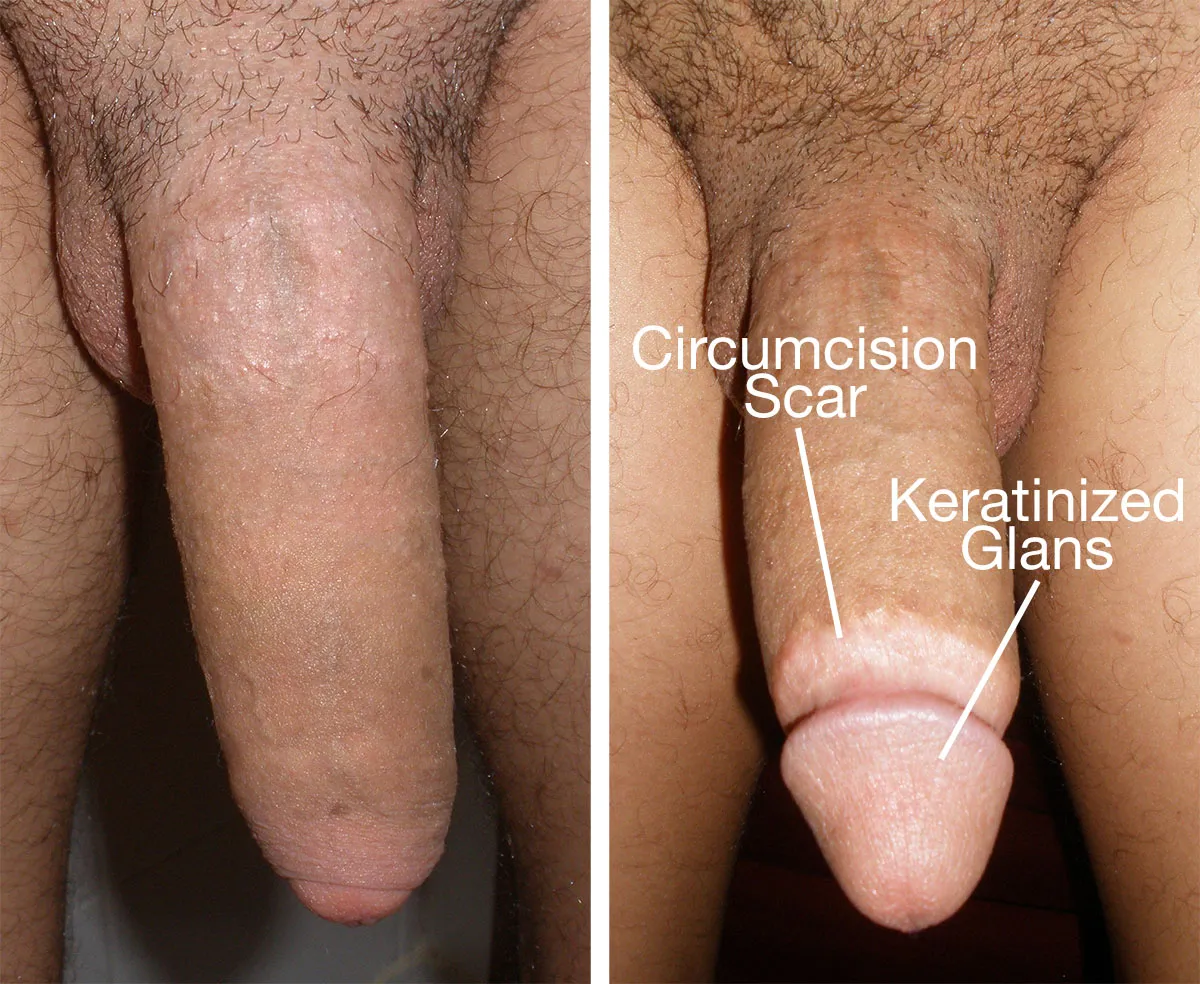
When the foreskin is removed at birth, the glans—designed to be an internal structure—is permanently denuded. Exposure to urine, feces, and chafing causes it to dry out (keratinize) and become less sensitive. [27]
What Does the Medical Community Say?
The medical community in the United States is conflicted about circumcision for newborns.
Some doctors advocate for circumcision, while many do not. Many doctors do not have their sons circumcised. [28] Little formal research has been conducted because the practice began far earlier than evidence-based medicine was formalized.

American Academy of Pediatrics (2012)
The AAP issued a report with various contradictory statements [29]:
- The benefits are not great enough to recommend circumcision for all baby boys.
- The benefits of newborn circumcision outweigh the risks.
- The true incidence of complications after newborn circumcision is unknown.

European, UK & Australian Physicians
Condemn infant circumcision as not medically beneficial and a violation of children's human rights. 39 physicians and ethicists published a critique [30]:
- Circumcision fails to meet criteria for justification of preventive medical procedures in children.
- Circumcision causes postoperative pain and can have serious long-term consequences.
- Circumcision constitutes a violation of the UN Declaration of the Rights of the Child.
- Circumcision conflicts with the Hippocratic oath: "First, do no harm."

Dr. Andrew Freedman (2016)
A member of the 2012 AAP Circumcision Task Force published a commentary in Pediatrics emphasizing the AAP's conclusion that "health benefits are not great enough to recommend routine circumcision."[31]